Tatooed Barbie

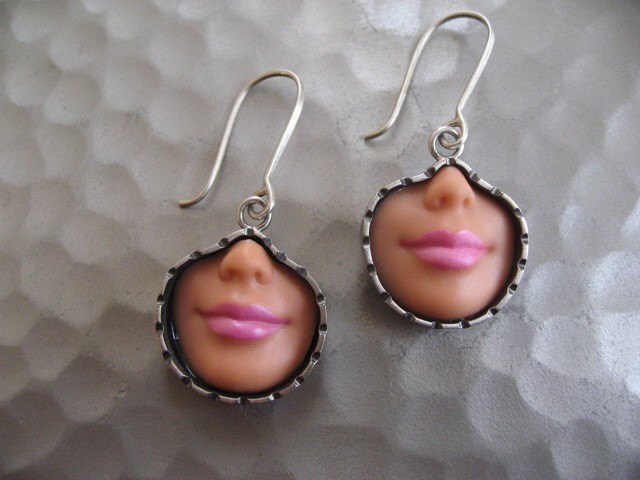

 I have been observing my 5-, 8- and 9-year-old nieces as they navigate the virtual worlds 'Club Penguin' and 'Barbie Girls'. Interestingly, the social side of this 'social software' appears to take second-place to identity construction and shopping (and therefore needing to earn enough money to shop). Children's play has been embedded within commercialised practices for many years, but this engagement with a virtual labour market is novel. Some parents may no doubt quite like the idea of their children developing a work ethic, but it seems to me that this aspect of these worlds mitigates against more extensive social involvement and further entrenches children in the markets of globalised commodities. For example, the Barbie virtual shopping experience is linked to the 'real'-word purchase of a Barbie MP3 player - once you have purchased that (with 'real' $s, not 'Barbie bucks'), you can buy more, even cooler, things in the online world. I guess what is going on here is little different to some of the adult activity in virtual worlds - this is, as we know, a booming real-word economy. This analysis of virtual (or 'synthetic') world economies draws on Bourdieu's concepts of economic, social and cultural capital, concepts as relevant to these spaces as 'meat-space'. Certainly, an analysis of the interactions of these three forms of capital can help to illuminate much of the current activity in 'Club Penguin' and 'Barbie World' and is informing a current paper I am writing, which I will post here when I set up the appropriate feeder site. It will be interesting to hear about the project Guy is involved in, in which he is working with schools on constructing and using a virtual world - what form of capital becomes of most value in an educationally-orientated virtual world? Virtual cultural capital?


 Posts
All Comments
Posts
All Comments


